
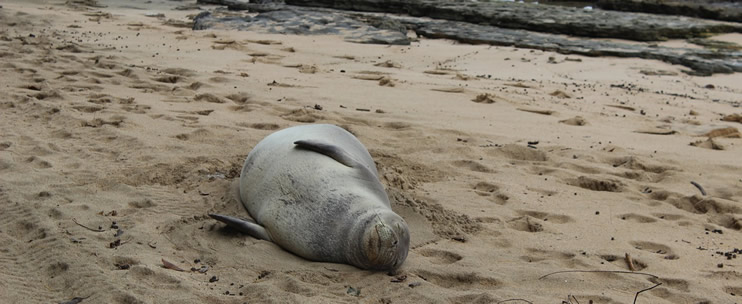
If you are fortunate enough to have visited any of the Hawaiian Islands, you have almost surely seen a Hawaiian Monk Seal relaxing on the beach. This massive mammal is known to lazily rest on Hawaiian beaches, sleeping the day away following an extended time at sea. Seals can come off as a bit of a clown, though they are quite the ferocious predator and have incredible powerful jaws and teeth that are very intimidating. Sadly, the Hawaiian Monk Seal is an endangered species, though they have started to recover from years of a variety of factors.
Found all over Hawaii, but mostly on the northwestern islands, the monk seal is a frequent visitor to deserted beaches, though they are known to come ashore on populated beaches like Waikiki Beach. Just the site of a monk seal is a unique experience, and when you consider that there are less than 1,500 of them in the wild, spotting one is an especially special occurrence. Like the Hawaiian Green Sea Turtle, the Hawaiian Monk Seal is protected and law prohibits contact with them. If you see one, please let it be, and enjoy the resting seal from a distance.
The Monk Seal spends about 2/3rds of its life at sea, hunting for fish and food and foraging in waters of about 200 feet deep. Once they are done hunting, the seal “hauls out” of the water to rest, often returning to the same spots over and over again. They prefer sandy beaches, but have been observed sleeping on exposed rocky formations and coral as well, meaning that they will sleep just about anywhere.
Growing to 6-7 feet in length and 400-600 pounds, the Hawaiian Monk Seal is an imposing figure, and moves effortlessly through the water in search of food. They can hold their breath for 20 minutes at a time, with most observed diving for only about 6 minutes with each breath. A resting Monk Seal is of no threat to humans and when they haul out of the water, they will sleep for hours, enjoying the warm sun and sand following an extended trek in the water.
Hawaiian Monk Seals are quite unpredictable, so spotting one is very tough. It is common to come across one on the North and Windward Shores of the islands, especially Oahu’s Waimea Bay and Sunset Beach and at beaches along Kauai’s Na Pali Coast. It is very important to remember that these creatures are protected and should never be approached, though if you do see one resting on the beach, enjoy them from a distance and watch for movement back into the ocean.
Due to the high volume of visitors traveling to Hawaii year round, our Hawaii tours and activities sell out quickly. In many cases, tours sell out weeks or months in advance. To ensure your spots on tour, we recommend reserving your tours today. Call our office or book online to take advantage of our low price guarantee today.